Chimichurri Sauce With Fresh Herbs, Red Wine Vinegar, and Lemon
By Ethan Parker
Prep
15 min
Total
15 min
Servings
8
Level
Easy
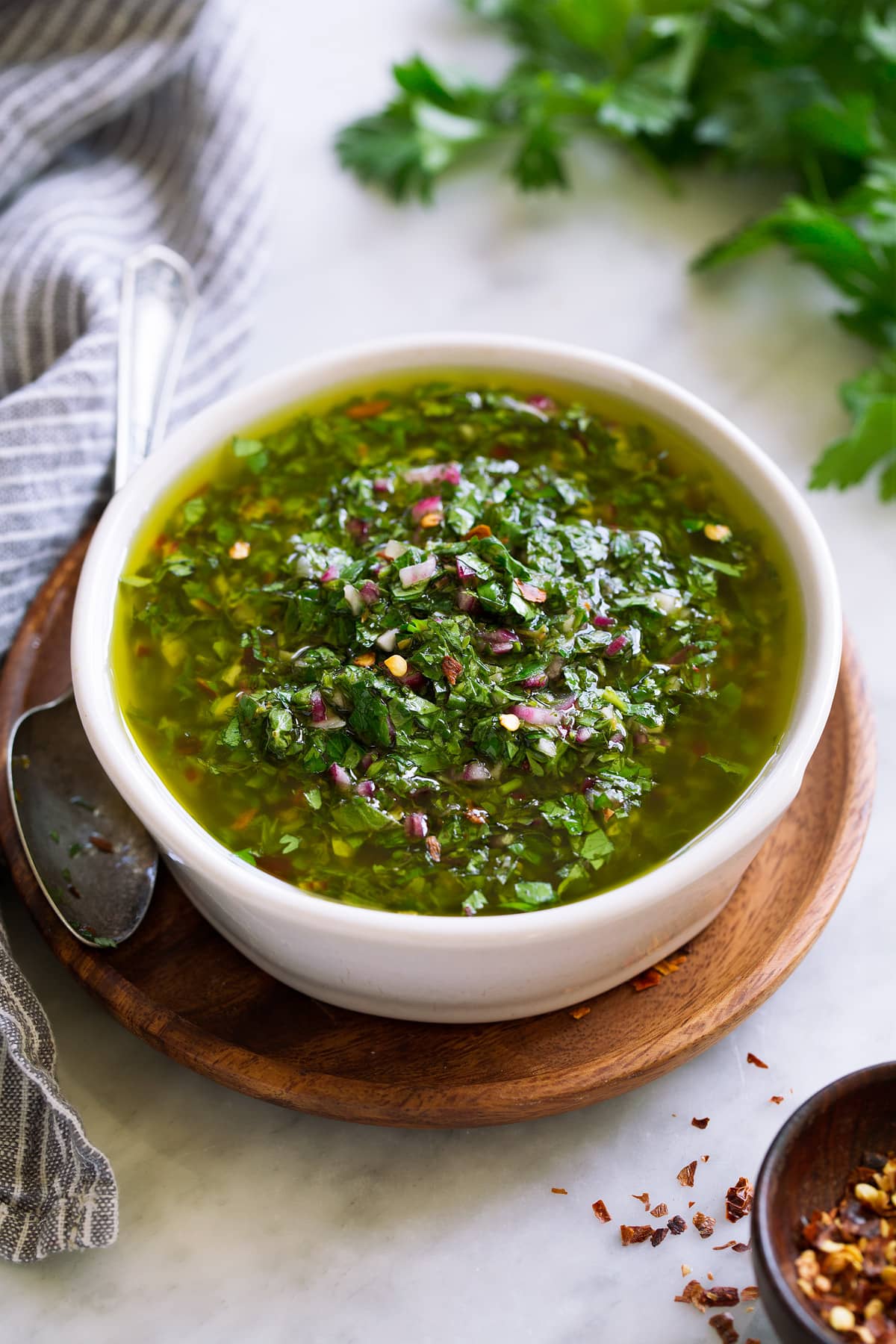
Make a big batch of chimichurri at the start of the week to use as a condiment on other dishes and sandwiches during the week, among other things. Chimichurri will store in the refrigerator for up to 5 days and in the freezer for up to 1 month. It has a parsley and cilantro flavor with lemon and vinegar notes and can be served easily alongside other dishes.
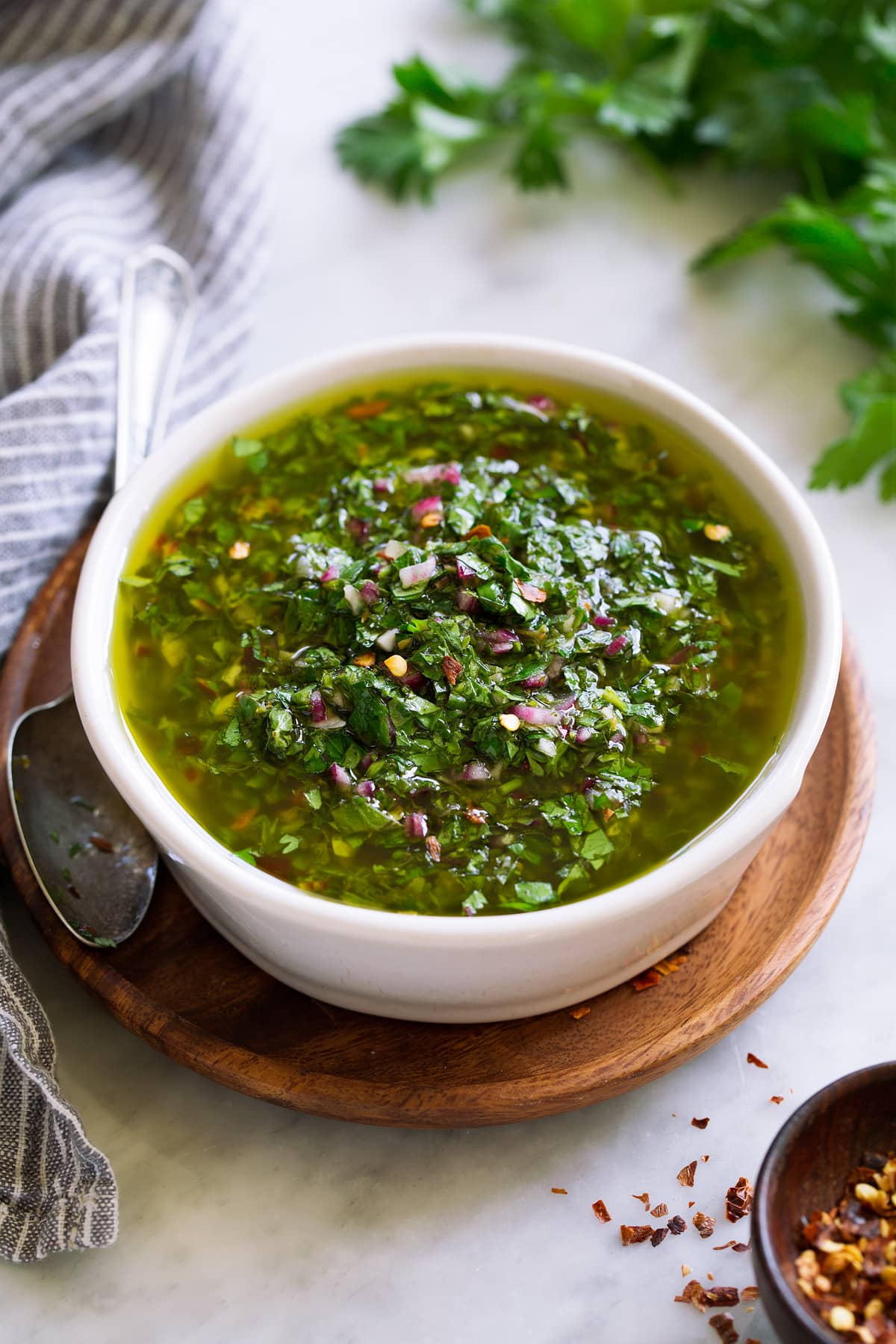
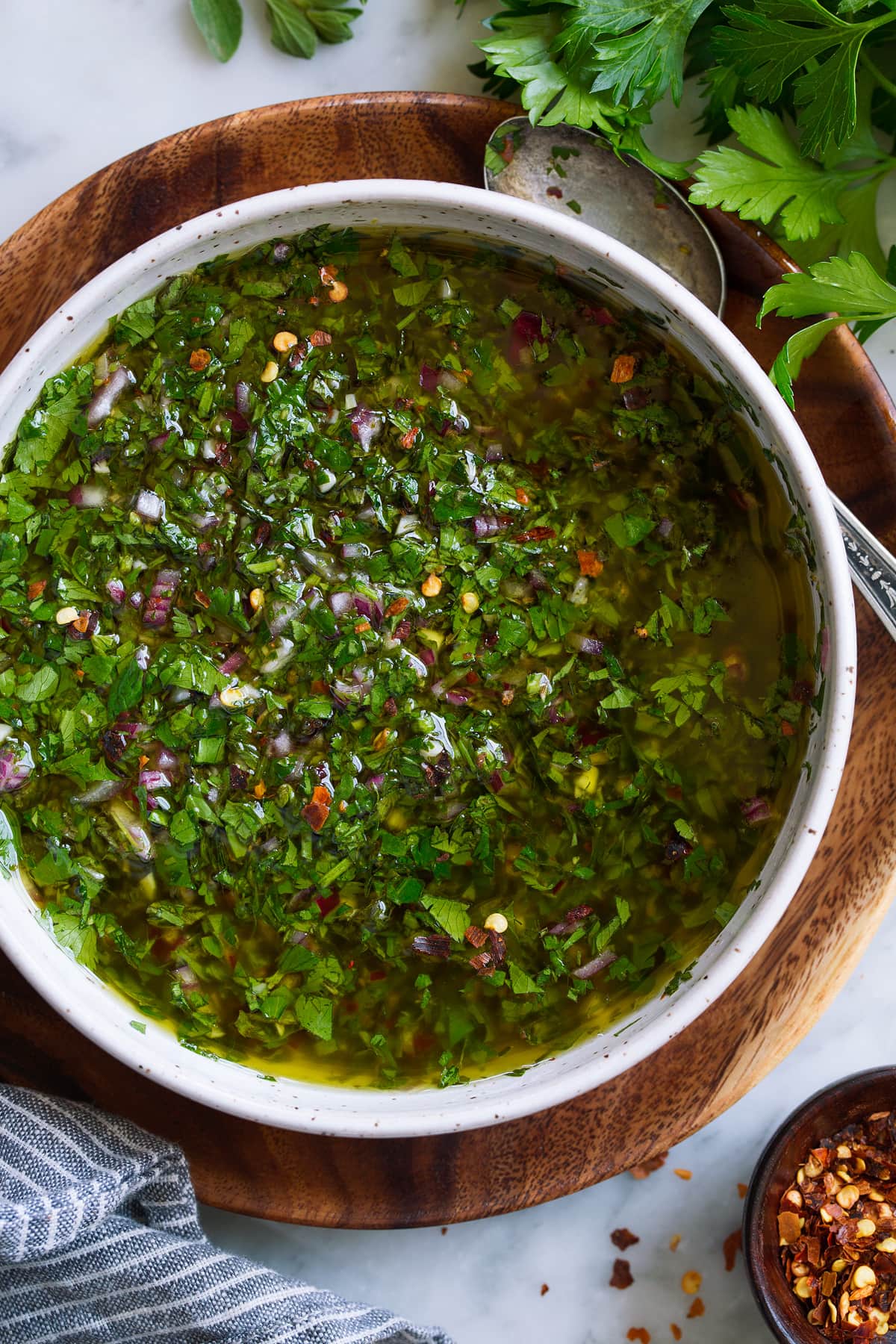
Parsley, cilantro, and oregano are essential ingredients in these herbed sauces. Chopped red onion and garlic add robust flavors. Red wine vinegar and fresh lemon juice add acid. Olive oil helps bind the other ingredients to make a spoonable sauce. Season to taste with salt and optional red pepper flakes. Substitute dried oregano for fresh oregano if needed.
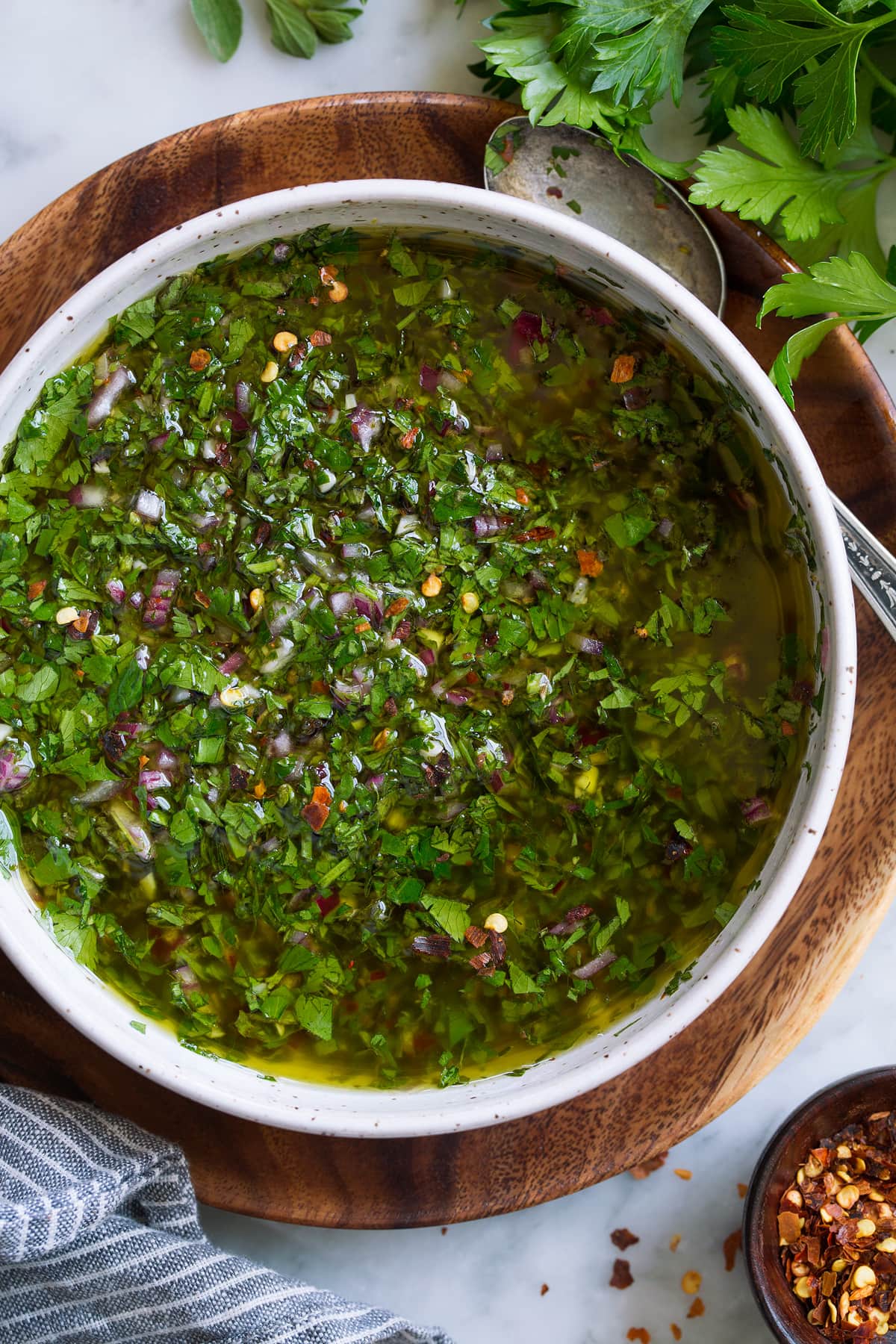
Whether mincing by hand or with a food processor, the goal is to mince the herbs finely while retaining some texture. When using a food processor, mince the onion, garlic, vinegar, lemon juice, and salt in batches, pausing to scrape the sides of the food processor as necessary, then add the herbs and oil and mince again. One mistake people make when using a food processor is mincing the mixture too much and turning it into a sauce rather than a condiment.
Use chimichurri as a topping for steak, chicken, salmon, shrimp, potatoes, corn, and other vegetables. Add chimichurri to sandwiches and wraps. Store unused chimichurri in an airtight container to enjoy with several meals. Serve chimichurri as a dip or marinade instead of a sauce if desired.
Why you'll love this recipe
- Makes 1 1/3 cups. One batch will serve several meals as a topping for meat, fish, vegetables, and sandwiches.
- Lasts up to 5 days in the refrigerator. Parsley, cilantro, oregano, vinegar, and olive oil flavors provide a convenient seasoning that can be prepared ahead of time.
- Freezes for about a month. You can use ice cube trays to create individual portions, which you can store in an airtight container after freezing.
- Dividing sauce into smaller portions makes it easier throughout the week to use smaller amounts of sauce, such as one spoonful, with other dishes like chicken and roasted vegetables.
- Two methods for making the dish have benefits based on time considerations: chopping by hand gives more control; a food processor quickly chops the onion, garlic, herbs, and oil.
- Its rough texture holds up to advance preparation because the herbs are finely chopped rather than pureed and can be used as a dip, spread, or marinade.
Ingredients
- •1 ½ cups fresh parsley (well packed)
- •½ cup fresh cilantro (well packed)
- •¼ cup fresh oregano (or 1 tsp dried oregano)
- •¼ small red onion (or one small shallot)
- •3 garlic cloves
- •3 Tbsp red wine vinegar
- •2 Tbsp fresh lemon juice
- •½ tsp salt (then more to taste)
- •¼ tsp red pepper flakes (optional, more or less to taste)
- •¾ cup olive oil
Instructions
- 1
For the by-hand method, finely chop the parsley, cilantro, oregano, red onion, and garlic.
- 2
Add the chopped ingredients to a mixing bowl with all remaining ingredients and stir to blend.
- 3
For the food processor method, roughly chop the onion and garlic; do not pre-chop the herbs.
- 4
Add the red onion, garlic, red wine vinegar, lemon juice, and salt to a food processor.
- 5
Pulse, stopping to scrape down the sides occasionally, until finely minced.
- 6
Add the parsley, cilantro, oregano, and red pepper flakes.
- 7
Pour in the olive oil while pulsing several times, until the herb leaves are finely minced but still have body and texture.
- 8
Spread over meat, poultry, seafood, or vegetables, or use as a marinade.
FAQ
Nutrition (per serving)
Calories
187
Protein
1g
Fat
20g
Carbs
2g
Reviews
Pin this recipe
Tap an image to save it to Pinterest.